
Impulse buying
Doom spending vs retail therapy: what's the difference?
One is a treat to feel better. The other is spending because the future feels too uncertain to save for. Both can quietly drain a paycheck.
Quick answer
Retail therapy is buying something to lift your mood: a treat after a bad day. Doom spending is spending to cope with worry about the economy, the news or the future, often with a "what's the point of saving?" feeling. Both use shopping to manage emotions. What matters isn't the label but how often it happens and whether it's eating into money you need.
What is retail therapy?
Retail therapy means shopping to feel better. It's usually about a specific mood: a stressful week, a breakup, a disappointment. And it can genuinely help in the short term: University of Michigan experiments found that making purchase decisions reduced lingering sadness by restoring a sense of control. The catch is that the lift fades, and if it becomes your main coping tool, it gets expensive.
What is doom spending?
Doom spending is a newer name for spending driven by anxiety about the bigger picture: inflation, layoffs, the news, the sense that milestones like buying a home are out of reach anyway. If saving feels pointless, spending now can feel like the only thing that makes sense. The term took off after a 2023 Intuit Credit Karma survey found that 27% of Americans said they doom spend, including 35% of Gen Z and 43% of millennials.
Retail therapy vs doom spending at a glance
| Retail therapy | Doom spending | |
|---|---|---|
| Driven by | A specific mood: sad, stressed, bored | Worry about the future, the economy or the news |
| Typical thought | "I deserve a treat" | "Why bother saving?" |
| Pattern | Occasional bursts | Ongoing, often while scrolling |
| Risk | Overspending after bad days | Steadily undermining savings and goals |
How to rein in both
- Notice the feeling first. "I'm about to buy this because I'm stressed" is a powerful sentence to say out loud.
- Cut the doom feed. Limit news and social scrolling, especially late at night, when anxious browsing turns into shopping.
- Plan your treats. A small, guilt-free amount each paycheck gives retail therapy a budget instead of a blank check.
- Give saving a nearer goal. If the big future feels out of reach, save for something close: a trip, a buffer of one month's bills.
- Add a pause before any unplanned purchase, like the 24-hour rule.
If spending is your main way of coping with anxiety or low mood, or it's causing debt, consider talking to a doctor or counselor. You deserve better tools than a shopping cart.
Put a pause in front of the feeling
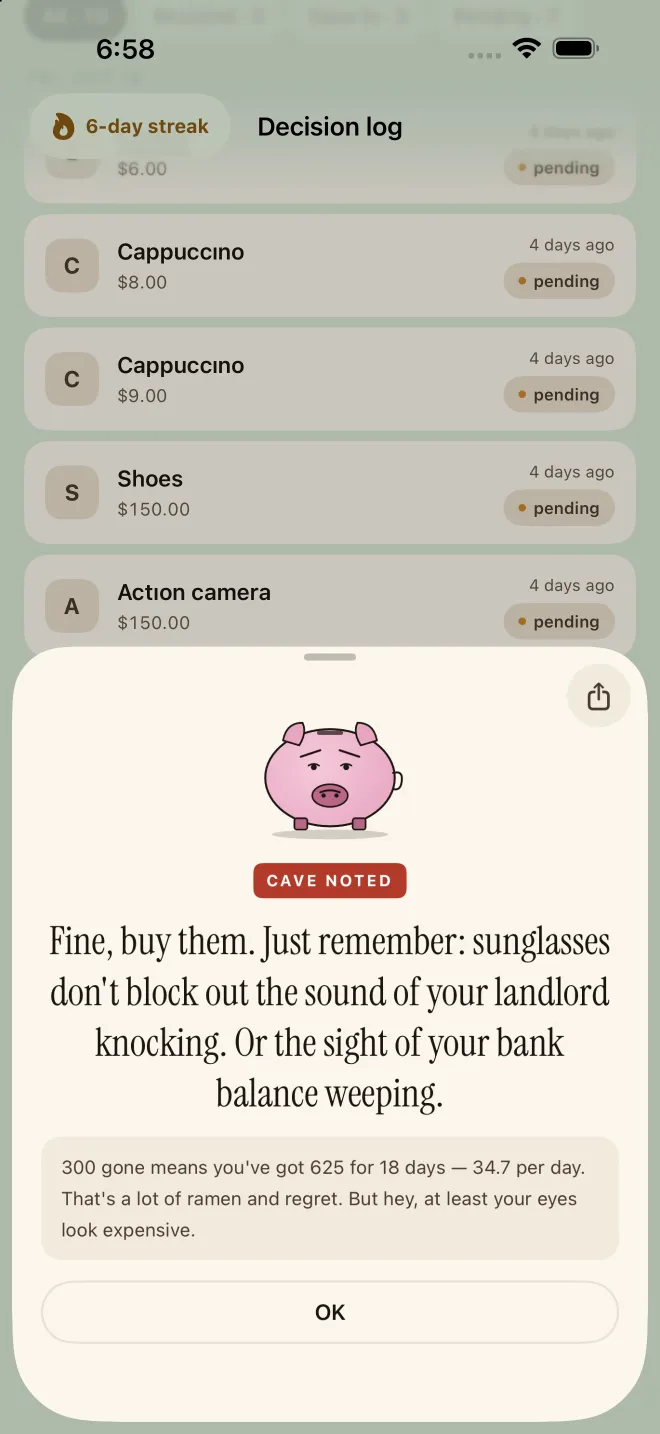
- Ask Pork when the urge hitsType the item and the price, especially mid-scroll.
- Let the numbers talkPork checks it against what's safe to spend before payday, which is a calmer kind of future to think about.
- Watch the money you keptEvery resisted ask adds up as money avoided: proof that saving isn't pointless.
Frequently asked questions
Is retail therapy bad?
Not necessarily. An occasional planned treat after a hard week is fine if it fits your budget. It becomes a problem when it's frequent, unplanned, or the main way you deal with difficult feelings.
How do I stop doom spending?
Limit the news and social scrolling that sets it off, give yourself a small planned treat budget, and redirect some money toward a short-term goal so saving feels worthwhile again. Building even a small emergency fund can ease the anxiety that drives it.
Why do people doom spend?
When the future feels uncertain, long-term saving can feel pointless, and spending now offers control and comfort. It's a very human response to stress, which is why it helps to plan for it rather than rely on willpower.
Sources & further reading
- Forget doom scrolling, Americans now doom spend to cope with stress — Intuit Credit Karma survey, 2023
- The benefits of retail therapy: making purchase decisions reduces residual sadness (Rick, Pereira & Burson) — Journal of Consumer Psychology, 2014
- An essential guide to building an emergency fund — Consumer Financial Protection Bureau
Next Paycheck is a budgeting and spending-accountability tool, not a bank or a financial adviser. This page is general information for educational purposes, not financial, legal or tax advice: your situation is your own, so consider a qualified professional before major money decisions. If debt feels unmanageable, a nonprofit credit counselor can help, and if shopping feels out of control or is causing you distress, it is worth talking to a doctor or mental health professional.