
Calculator
Cost per use calculator: is it actually worth the price?
A $40 jacket you wear five times costs more per wear than a $150 one you wear a hundred. The math is simple; doing it before you pay is the hard part.
Quick answer
Cost per use = (price − any resale value) ÷ the number of times you'll realistically use it. A $120 pair of boots worn twice a week for two winters (about 70 wears) costs about $1.70 per wear; a $45 pair worn ten times before it falls apart costs $4.50. Use the calculator below to compare two options before you buy.
Cost per use calculator
Be honest about the uses. "I'll go to yoga three times a week" is how mats end up in closets.
Option B is cheaper per use
Option A: $4.50 per use
Option B: $1.71 per use
Tip: total uses = uses per week × weeks you'll realistically keep it.
Option A: {cost} per use
Option B: {cost} per use
A tie
Option A is cheaper per use
Option B is cheaper per use
How to estimate uses honestly
The formula is easy; the uses are where we lie to ourselves. A few ways to keep the estimate real:
- Base it on what you already do, not on the person you plan to become. If you run once a month now, new running shoes won't make it four times a week.
- Check a similar thing you own. How often did you actually use the last one?
- Count the season. A winter coat might be worn 90 days a year, not 365.
- Halve it for anything aspirational: fitness gear, kitchen gadgets, craft supplies.
When cost per use helps, and when it doesn't
Cost per use is brilliant for things you'll use repeatedly: clothes, shoes, tools, a coffee machine versus the daily café. It's less useful for one-off experiences, or for things that don't get cheaper with use, like food. It also doesn't answer the most important question: can you afford it this paycheck? A low cost per wear on a $300 coat still doesn't help if rent is due on Friday. For that, use the safe-to-spend calculator.
Three quick examples
| Purchase | Price | Realistic uses | Cost per use |
|---|---|---|---|
| Fast-fashion top | $18 | 6 | $3.00 |
| Good everyday jeans | $90 | 150 | $0.60 |
| Home espresso machine vs. café | $250 | 500 coffees | $0.50 + beans |
| "I'll get into baking" stand mixer | $330 | 4 | $82.50 |
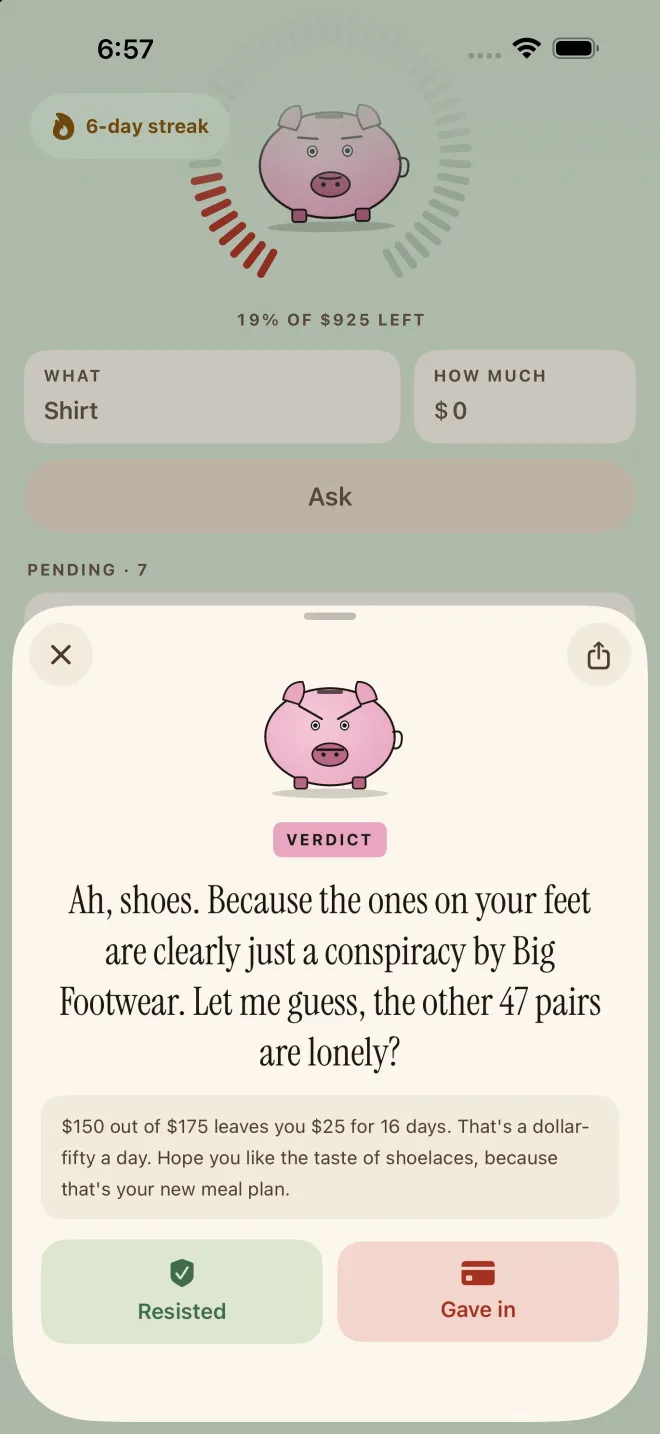
Run it past Pork
- Ask before you buyType the item and the price into Next Paycheck.
- Get the reality checkPork weighs it against what's safe to spend this paycheck and roasts the idea, which is often the push you need to re-check those optimistic "uses".
- Log your decisionResisted? It's counted as money avoided. Bought it anyway? It comes off what's left until payday.
Frequently asked questions
What's a good cost per wear for clothes?
There's no official number, but many people aim for a dollar or two per wear for everyday clothes. The more useful check is comparison: if a pricier item will be worn far more often, it can easily cost less per wear than the bargain.
Should I include resale value?
If you'll realistically sell it, yes: subtract what you expect to get back from the price first. For clothes and gadgets that you'll keep until they wear out, leave it at zero.
Does cost per use mean I should always buy the expensive version?
No. It only favors the pricier option if you'll genuinely use it more and it lasts longer. Be honest about the uses, especially for hobbies and fitness gear, where good intentions inflate the numbers.
Next Paycheck is a budgeting and spending-accountability tool, not a bank or a financial adviser. This page is general information for educational purposes, not financial, legal or tax advice: your situation is your own, so consider a qualified professional before major money decisions. If debt feels unmanageable, a nonprofit credit counselor can help, and if shopping feels out of control or is causing you distress, it is worth talking to a doctor or mental health professional.