
Impulse buying
What is a spending trigger? Examples, and how to spot yours
Most impulse buys have a starting gun. Find out what fires yours, and you can be somewhere else when it goes off.
Quick answer
A spending trigger is anything that reliably makes you want to buy something: a feeling (stress, boredom, loneliness, excitement), a time (late at night, payday, Friday afternoon), a place (a favorite store or app), a person or situation (a friend who loves shopping), or a digital cue (sale emails, ads, notifications). Logging what was happening right before each impulse buy is the quickest way to find yours.
Emotions are one of the biggest: in a 2025 LendingTree survey, 63% of people said their emotions influence what they buy. Triggers matter because they come before the decision. By the time you're looking at a product, the urge is already running. Spot the trigger, and you can often avoid the urge entirely.
Common spending triggers, with examples
| Type | Examples |
|---|---|
| Emotional | A stressful day, boredom, feeling down, loneliness, anxiety about money (ironically), wanting to celebrate |
| Time | Late at night, payday, the weekend, the commute home, after a workout ("I earned it") |
| Place | The mall, a favorite store, the checkout aisle, a particular app or site |
| Social | Shopping with a certain friend, group dinners, seeing what others have, gift pressure |
| Digital | Sale emails, "back in stock" alerts, influencer posts, targeted ads, live-stream shopping |
| Physical | Being tired or hungry, which is why grocery shopping hungry goes so badly |
How to find your triggers
- Log every urge for two weeks, whether you buy or not: what, when, where, and how you felt. A simple impulse spending journal works.
- Look for repeats. Most people find two or three triggers behind the majority of their impulse buys.
- Rank them by cost. Focus on the trigger that's costing the most, not the one that's most embarrassing.
How to defuse a trigger
- Avoid it where you can: unsubscribe, unfollow, delete the app, take a different route home.
- Delay it where you can't: when the urge hits, put the item on a wish list and wait a day.
- Replace it: if boredom triggers shopping, have a few free, quick alternatives ready.
- Prepare for it: decide your limit before the group dinner or the shopping trip.
- Make an if-then plan: "If a sale email arrives, then I archive it without opening it." Research across nearly a hundred studies found plans like these make goals noticeably more achievable.
Find your triggers with Next Paycheck
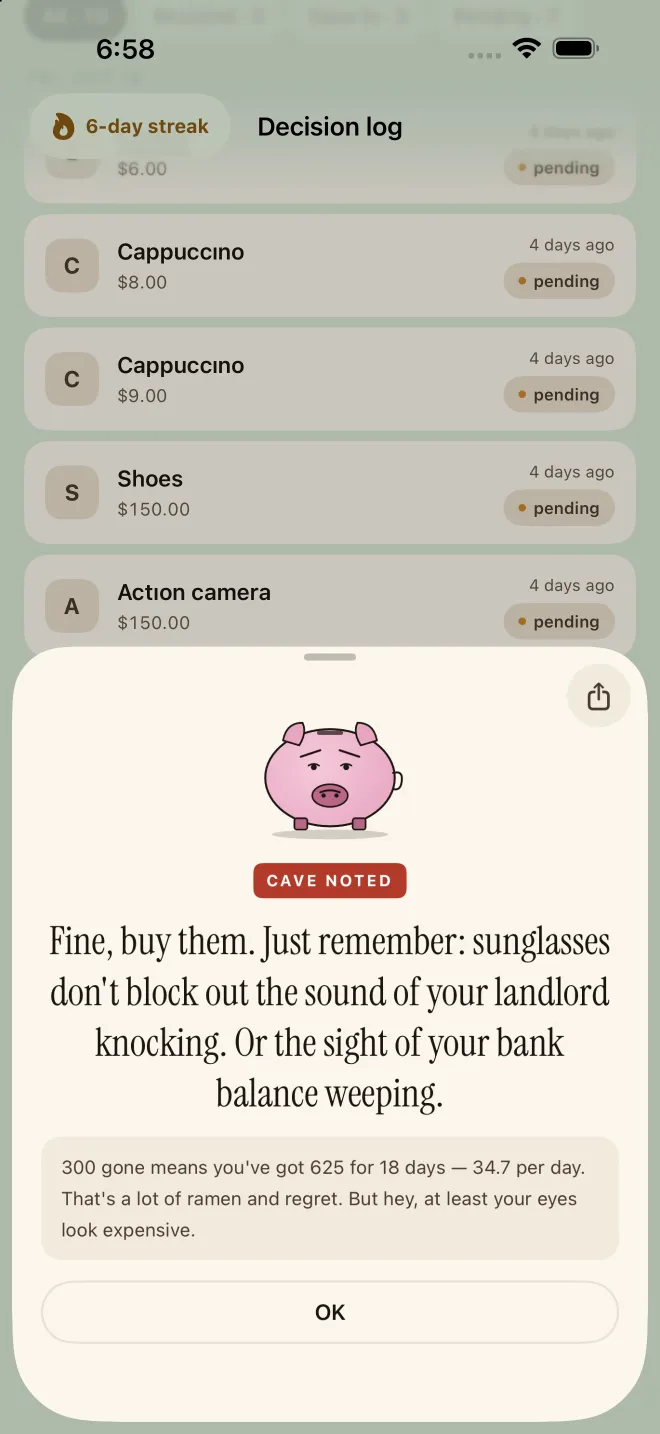
- Ask Pork every time you're temptedEach ask is timestamped with the item and the price.
- Log resisted or gave inSo you can see which urges you beat and which beat you.
- Read the patternWith NextPaycheck+, the Decision log groups every ask by day, so late-night or payday spikes stand out.
Frequently asked questions
What are emotional spending triggers?
Feelings that push you to shop to change your mood: stress, boredom, sadness, loneliness, anxiety, and also good feelings like excitement or wanting to celebrate. Emotional spending is common; the goal is to notice it, not to never feel anything.
Can a person be a spending trigger?
Yes. Certain friends, family members or social situations can make spending feel expected: group dinners, shopping trips, gift-giving pressure. You don't have to avoid people, but you can decide your limit before you go.
How do I stop being triggered by sales?
Unsubscribe from store emails, turn off price-drop alerts, and ask one question when you see a deal: would I buy this at full price? If not, the sale is the only reason, and that's not a reason.
Sources & further reading
- Emotional shopping survey — LendingTree (marketing survey), 2025
- Implementation intentions and goal achievement: a meta-analysis (Gollwitzer & Sheeran) — Advances in Experimental Social Psychology, 2006
Next Paycheck is a budgeting and spending-accountability tool, not a bank or a financial adviser. This page is general information for educational purposes, not financial, legal or tax advice: your situation is your own, so consider a qualified professional before major money decisions. If debt feels unmanageable, a nonprofit credit counselor can help, and if shopping feels out of control or is causing you distress, it is worth talking to a doctor or mental health professional.