
Challenge
Low-buy year rules: how to do a low-buy (or no-buy) year without hating it
A no-spend month is a sprint. A low-buy year is a lifestyle experiment: fewer, better purchases, on purpose. The secret is writing rules you can actually live with.
Quick answer
A low-buy year is twelve months of buying only what you need plus a small, planned set of wants. You choose categories (clothes, beauty, gadgets, home decor), set an allowance for each (for example, five clothing items or $200 for the year), add a replacement-only rule for things that wear out, and send every other urge to a wish list with a waiting period. A no-buy year is the strict version: no new purchases in those categories at all.
The low-buy idea took off as a reaction to overflowing closets and "haul" culture: instead of banning shopping, you shrink it to what you actually value. Done well, it's less about deprivation and more about noticing how little of what you used to buy you actually miss.
How to set your low-buy rules
- Pick your categories. Start with the ones you overspend on most. Your bank statements, or a couple of weeks of a spending journal, will tell you.
- Set an allowance for each. A number of items ("three pairs of shoes") or a budget ("$150 a year on beauty"). Zero is allowed: that category is no-buy.
- Add a replacement rule. When something essential breaks or runs out, you can replace it, with one like it, once it's actually used up.
- Decide the exceptions in advance: gifts, travel, a planned big purchase.
- Use a wish list with a waiting period. Anything you want that isn't covered goes on the list for at least 30 days. See the waiting rules.
- Schedule check-ins. A quick review each month keeps the rules honest and lets you adjust them.
Example low-buy rules
| Category | Rule for the year |
|---|---|
| Clothes & shoes | 6 items total, replacements for worn-out basics allowed |
| Beauty & skincare | Replace only when empty; no new products to "try" |
| Books | Library first; buy only after a 30-day wait |
| Home decor | No-buy |
| Tech & gadgets | Replace only when broken beyond repair |
| Takeout | Twice a month, budgeted |
Printable low-buy rules sheet
Fill it in, sign it, stick it inside a cupboard you open every day.
| Category | Allowance (items or $) | Replacement rule | Used so far |
|---|---|---|---|
- Start date: ______________
- Exceptions I've planned: ______________
- Wish-list waiting period: ______ days
- Monthly check-in day: ______
- What I'll do with the money I save: ______________
How to stay on track for a whole year
- Cut the supply of temptation. Unsubscribe from store emails, unfollow haul and deal accounts, and delete shopping apps.
- Shop your own stuff. Reorganize, rediscover and finish what you already have.
- Keep a "didn't buy" list. Seeing the total of what you skipped is the best motivation.
- Give the saved money a job: an emergency fund, a debt, or a trip. Watching it grow makes the year feel like gaining something.
- Be kind about slip-ups. A low-buy year with three slips is still a year of dramatically less spending.
Keep your low-buy year honest with Next Paycheck
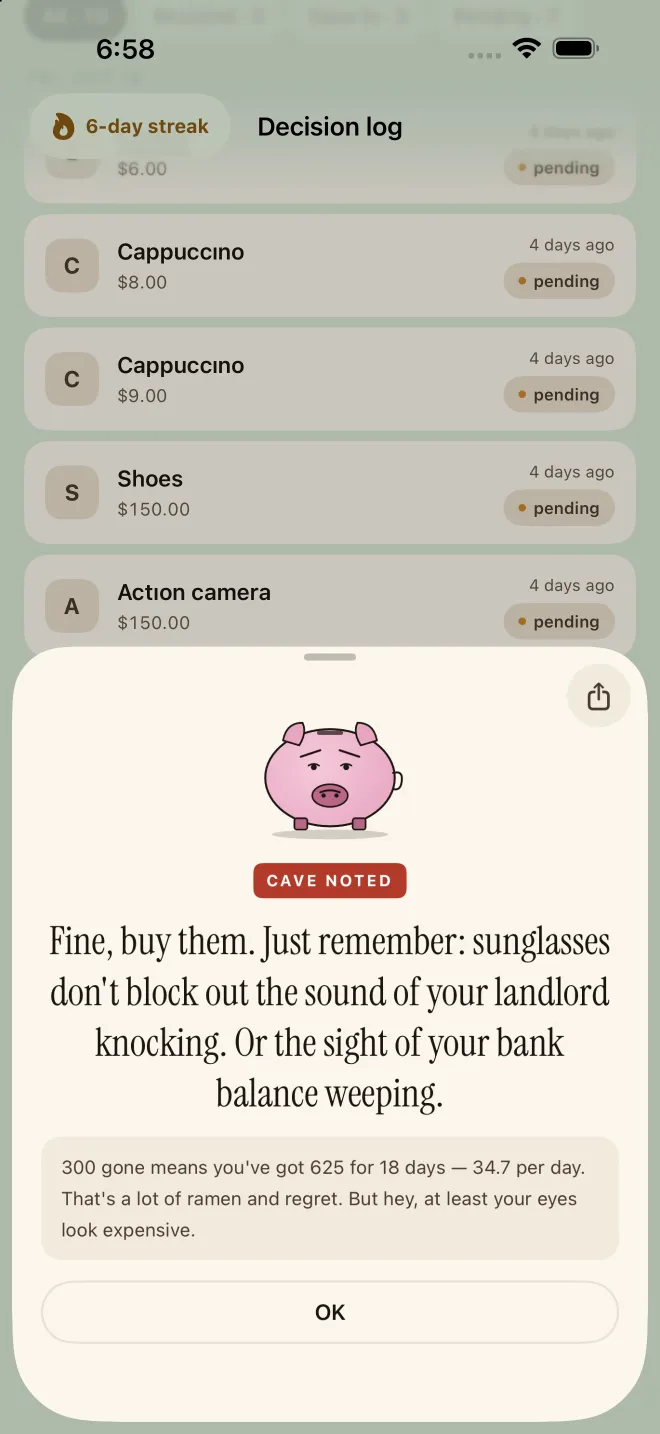
- Ask Pork about anything outside your rulesType it and the price. Pork checks it against what's safe to spend this paycheck and turns it down.
- Log the decisionResisted adds to your money-avoided total; Gave in resets your streak.
- Let the follow-up do its jobPork checks in on your latest ask hours later (1 to 72, you choose). By then the urge has usually gone.
- Review the yearWith NextPaycheck+, the Decision log keeps every ask, with resisted and gave-in totals and the lifetime amount saved.
Frequently asked questions
What's the difference between a no-buy and a low-buy year?
A no-buy year bans new purchases in chosen categories entirely, apart from true replacements. A low-buy year allows a small, planned amount: a few items or a fixed budget per category. Low-buy is easier to keep up for twelve months.
Can I start a low-buy year in the middle of the year?
Of course. The "year" is just twelve months from whenever you start. Many people begin with a three-month low-buy to test their rules, then extend it.
What if I break a rule?
Write down what happened and why, then carry on. If the same rule keeps breaking, it may be the rule that needs changing, not you.
Sources & further reading
- An essential guide to building an emergency fund — Consumer Financial Protection Bureau
- Spending tracker (Your Money, Your Goals) — Consumer Financial Protection Bureau
Next Paycheck is a budgeting and spending-accountability tool, not a bank or a financial adviser. This page is general information for educational purposes, not financial, legal or tax advice: your situation is your own, so consider a qualified professional before major money decisions. If debt feels unmanageable, a nonprofit credit counselor can help, and if shopping feels out of control or is causing you distress, it is worth talking to a doctor or mental health professional.