
Impulse buying
How to stop impulse buying at night: fixes for late-night shopping
Nothing good was ever bought at 1:14am. Tired brains, bright screens and one-tap checkout are a terrible combination. Here's how to break it.
Quick answer
To stop impulse buying at night, make shopping harder after a set time: log out of shopping apps and remove saved cards, turn off sale notifications, and keep your phone out of reach in bed. Anything you want goes on a list instead, with a simple rule: you decide in the morning. Most late-night urges don't survive breakfast.
Late-night shopping has a recognizable pattern. The day is over, you're tired, you pick up the phone "for five minutes", an ad or a feed full of products appears, and without any of the usual friction an order goes through. In the morning the urge has gone; the confirmation email hasn't.
Why night is the danger zone
- Tired self-control. Decisions get harder and impulses get louder when you're exhausted.
- Mood repair. After a long or stressful day, buying something is a quick way to feel a little better.
- No natural pauses. No store closing, no queue, no friend saying "do you really need that?"
- Endless feeds. Social and shopping apps are designed to keep you scrolling, and scrolling turns into shopping.
Fixes that work
- Set a shopping curfew. No purchases after, say, 10pm. Write it down.
- Log out and delete saved cards, so buying needs your card and some effort.
- Hide or delete shopping apps from your phone, especially the ones you open in bed.
- Turn off sale and "back in stock" notifications, and use your phone's downtime or focus mode at night.
- Charge your phone outside the bedroom, or at least out of arm's reach.
- Use a wish list. Save the item, decide in the morning. This is the 24-hour rule in its easiest form.
- Swap the habit. Keep a book, a podcast or a game ready for the time you'd normally scroll stores.
The morning test
Look at the list over coffee. For each item ask: do I still want it? Can I afford it before payday? Would I buy it at full price? Most items fail at least one question, and you'll be glad they never shipped. Sleeping on it is one of the strategies online impulse buyers most often say actually works, according to a 2019 University of Michigan study.
Make Pork your bedtime rule
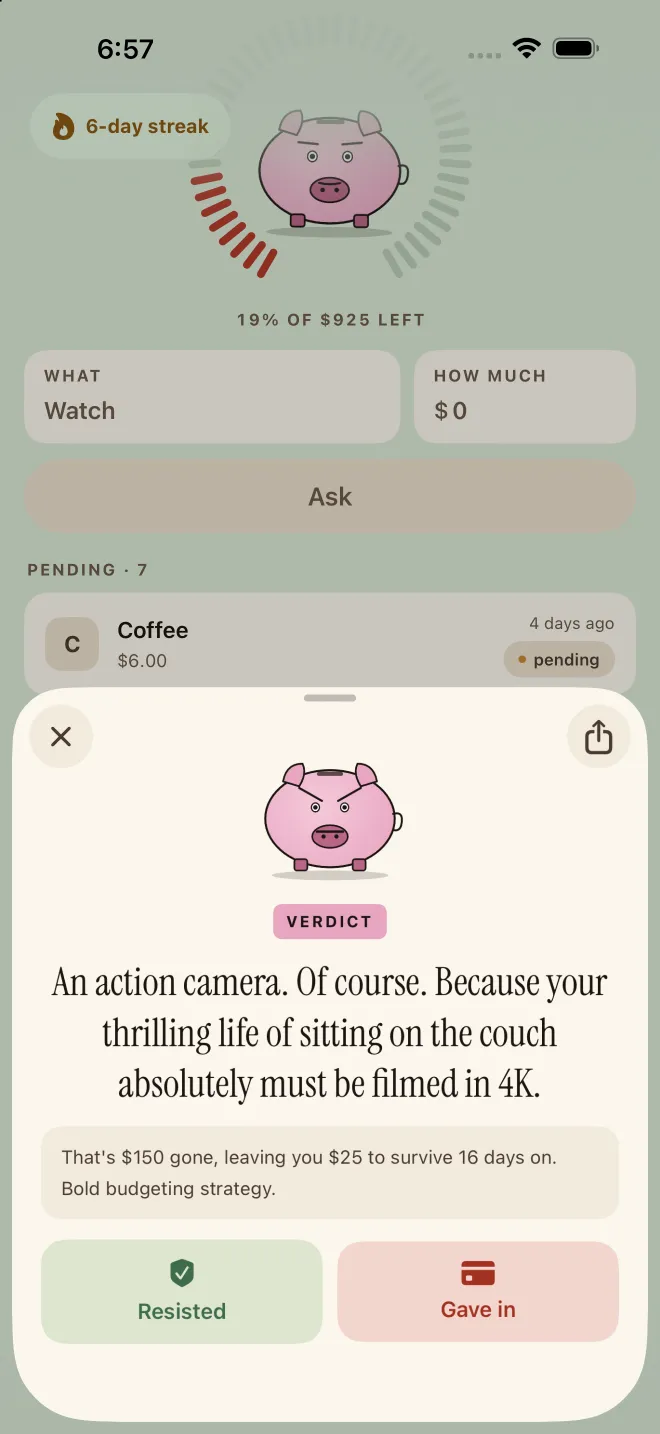
- Ask instead of buyingType the item and the price. Pork turns it down, with a roast, at any hour.
- Set the follow-up for the morningIn Settings, set Pork's follow-up to around 8 to 10 hours, so he asks whether you still want it after you've slept.
- Log the resultResisted adds to your money avoided. Gave in comes off what's left this paycheck.
Frequently asked questions
Why do I shop online at night?
Because it's when you're tired, alone with your phone, and often bored or stressed after the day. Self-control is weaker when you're tired, and late-night browsing has none of the natural pauses of daytime shopping.
Should I just delete all shopping apps?
If late-night shopping is your main problem, deleting or hiding the apps is one of the most effective fixes. You can still shop from a browser in daylight, when you've had time to decide.
What if I already bought something at night I regret?
Check the return or cancellation window straight away. Many orders can be cancelled before they ship. Then note what triggered it, so you can block that path next time.
Sources & further reading
- Impulse buying: design practices and consumer needs (Moser, Schoenebeck & Resnick) — ACM CHI Conference, 2019
Next Paycheck is a budgeting and spending-accountability tool, not a bank or a financial adviser. This page is general information for educational purposes, not financial, legal or tax advice: your situation is your own, so consider a qualified professional before major money decisions. If debt feels unmanageable, a nonprofit credit counselor can help, and if shopping feels out of control or is causing you distress, it is worth talking to a doctor or mental health professional.