
Impulse buying
Why do I feel guilty after buying things, and what to do about it?
Some post-purchase guilt is a useful signal. Some of it is just noise you've carried for years. Here's how to tell them apart.
Quick answer
You might feel guilty after buying things because the purchase clashed with a goal or budget, because it was bought to change a mood rather than meet a need, or because of money stress or old money messages that make spending feel wrong, even when it isn't. Guilt about an unaffordable impulse buy is useful information. Guilt about a planned, affordable purchase usually isn't.
Where post-purchase guilt comes from
- Buyer's remorse. The excitement of choosing fades, and what's left is the cost. This is most common after impulse buys and big purchases: in a 2025 LendingTree survey of people who shop to manage their emotions, 69% said they'd regretted a purchase.
- A goal you just undermined. If you're saving for something, or trying to pay off a card, any unplanned purchase can feel like a step backward.
- Mood spending. Buying to soothe stress or boredom often works briefly, then leaves you feeling worse about the money. Not always, though: one small study found that treats bought to lift a bad mood usually weren't followed by regret or guilt, which is why it's worth asking what this particular guilt is about.
- Money anxiety. When money feels tight, every purchase can feel risky, even small, necessary ones.
- Old messages. "Money doesn't grow on trees", "spending on yourself is selfish": beliefs from childhood can make guilt automatic.
Useful guilt vs unhelpful guilt
| Probably useful | Probably unhelpful |
|---|---|
| You couldn't really afford it before payday | It was planned and fits your budget |
| It was an impulse you'd normally regret | It's something you genuinely need |
| You already own something that does the job | You'll use it a lot |
| You bought it to escape a feeling | You're spending on yourself for the first time in ages |
What to do with the guilt
- Ask what it's pointing at. Was it the money, the impulse, or an old rule in your head?
- If it's a real problem, fix it if you can: return the item, or adjust the rest of this paycheck.
- Learn from the pattern. If guilt keeps following the same kind of purchase, put a waiting rule in front of it.
- Give yourself planned permission. A small, guilt-free "fun money" amount each paycheck makes spending on yourself a decision, not a lapse.
Decide first, with Next Paycheck
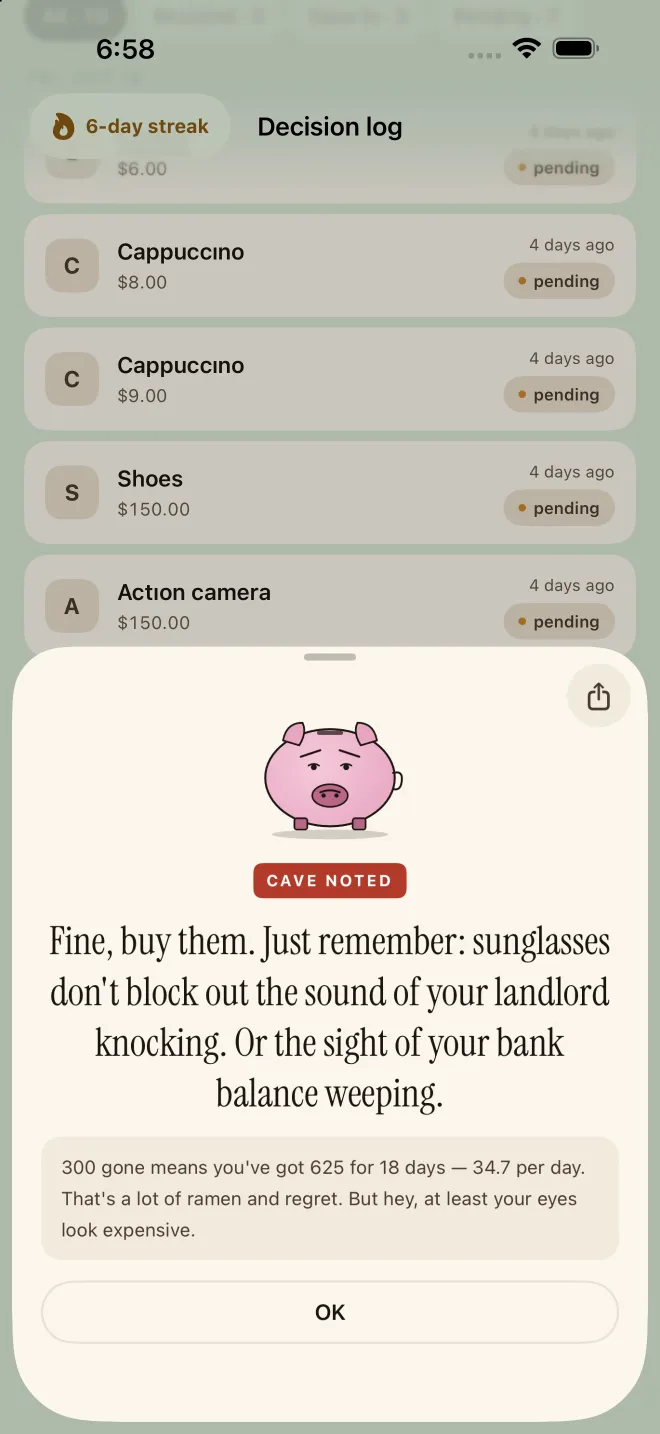
- Ask before you buyPork checks the price against what's safe to spend before payday, so you know whether you can afford it.
- Make it a real decisionResisted or gave in, it's your call, and it's on the record.
- See what you keptResisted asks add up as money avoided, a better feeling than guilt.
Frequently asked questions
Why do I feel guilty spending money on myself?
Often because of messages absorbed growing up (that spending on yourself is selfish or wasteful), or because money feels tight even when it isn't. Planning a small amount for yourself each paycheck can turn guilty spending into permission.
Should I return things I feel guilty about?
If the guilt is about a real problem (you can't afford it, you won't use it, you already own one), and returns are possible, it's often the right call. If you can afford it and will use it, the guilt may not be telling you anything useful.
Is feeling guilty after shopping a sign of a problem?
Occasional guilt is normal. If you regularly feel ashamed, hide purchases, or shop to escape feelings and then feel worse, it may be worth talking to a counselor or doctor.
Sources & further reading
- Emotional shopping survey — LendingTree (marketing survey), 2025
- Retail therapy: a strategic effort to improve mood (Atalay & Meloy) — Psychology & Marketing, 2011
Next Paycheck is a budgeting and spending-accountability tool, not a bank or a financial adviser. This page is general information for educational purposes, not financial, legal or tax advice: your situation is your own, so consider a qualified professional before major money decisions. If debt feels unmanageable, a nonprofit credit counselor can help, and if shopping feels out of control or is causing you distress, it is worth talking to a doctor or mental health professional.