Impulse buying
Why do I impulse buy? The real reasons, and what helps
You know you don't need it. You buy it anyway. That gap isn't a character flaw: it's a predictable mix of feelings, cues and very well-designed checkouts.
Quick answer
You impulse buy because, in the moment, the reward feels close and the cost feels far away. Feelings like boredom, stress, tiredness or excitement make that gap bigger, cues like ads, sale timers and notifications start the urge, and one-tap checkout removes the pause where you'd normally reconsider. The fix is less about willpower and more about putting a pause back in.
Almost everyone buys on impulse sometimes. It only becomes a problem when it's frequent enough to eat into money you need, or when you keep regretting it. Understanding why it happens makes it much easier to catch.
1. The reward is now; the cost is later
When you see something you want, the good part arrives instantly: the anticipation, the little thrill of choosing, the picture of yourself using it. The cost shows up later, on a statement or at the end of the month. Our brains weigh "now" much more heavily than "later", so in the moment the purchase feels like a good deal even when it isn't.
2. Feelings do a lot of the buying
Many impulse purchases are really mood purchases. Shopping can relieve boredom, soothe stress, reward a hard day, or extend a good mood. That's not irrational; it often works for a little while. Research backs that up: experiments at the University of Michigan found that making purchase decisions reduced lingering sadness, largely by restoring a sense of control. The trouble is that it's an expensive way to change how you feel, and the effect fades faster than the bill.
3. Cues start the urge
A lot of urges aren't spontaneous at all. They're triggered: a sale email, an influencer's post, a "back in stock" notification, walking past a favorite shop, payday. These are your spending triggers, and once you know yours, you can avoid a surprising number of them.
4. Checkout is designed to be frictionless
Saved cards, one-tap buying, "buy now, pay later" and countdown timers all exist to shorten the time between wanting and paying. Paying with a card or phone also tends to feel less painful than handing over cash, which makes spending easier. In one well-known experiment, people paying by card were willing to pay up to twice as much as people paying cash.
5. Tiredness and late nights
Self-control is harder when you're tired, hungry or overwhelmed. That's why so many regrettable orders happen late at night on a phone in bed. More on that in how to stop impulse buying at night.
What actually helps
- Add a pause. A 24-hour rule lets the feeling fade before you decide.
- Remove the shortcuts. Delete saved cards, log out of stores, turn off shopping notifications.
- Know your triggers. Two weeks of an impulse spending journal usually reveals them.
- Check the real number. Compare the price with what's safe to spend until payday, not with your balance.
- Plan some fun. A small budget for wants makes "no" easier the rest of the time.
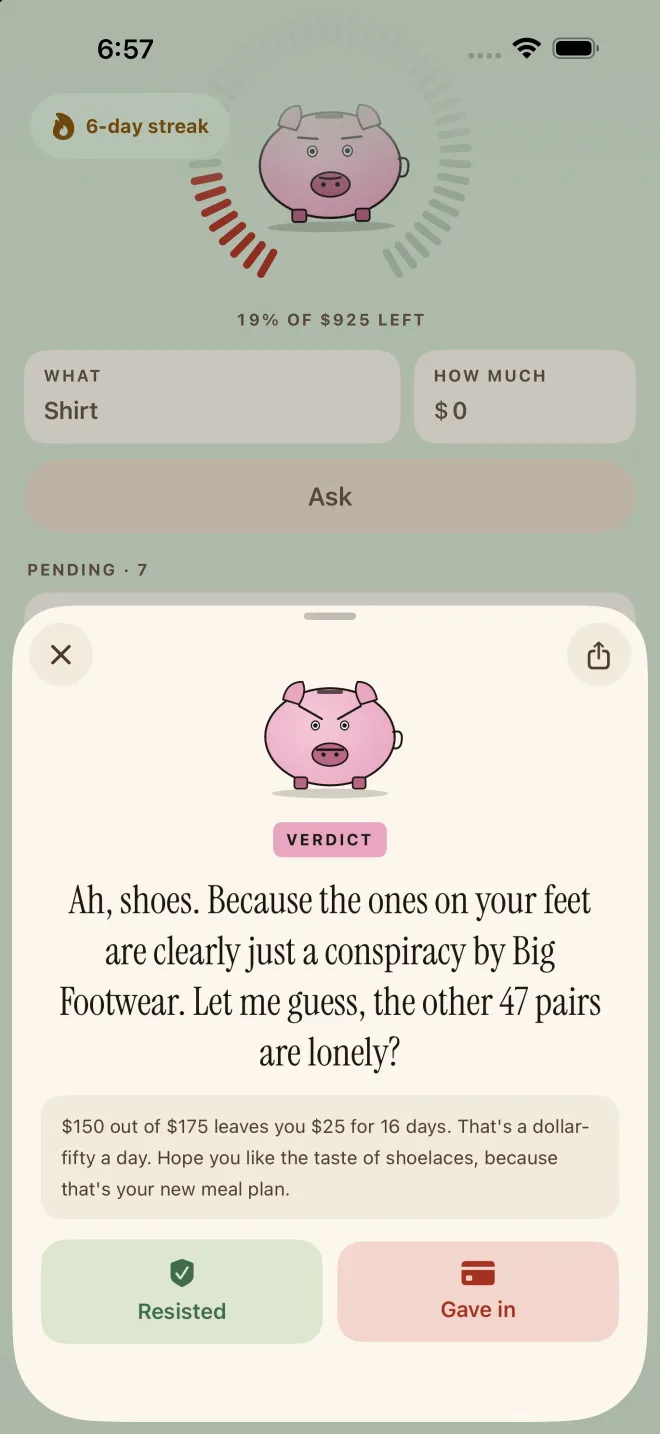
Put Pork in the gap
- Ask the moment the urge hitsType what you want and the price. That pause is half the battle.
- Get the reality checkPork weighs it against what's safe to spend before payday and roasts it.
- Log what you didResisted or gave in. Over time, your asks become a record of when and why you get tempted.
Frequently asked questions
Why do I impulse buy when I'm bored?
Browsing and buying give a small hit of novelty and anticipation, which is exactly what boredom is missing. That's why so much impulse shopping happens while scrolling with nothing else to do. Having a few free, quick alternatives ready (a walk, a call, a game) helps.
Is impulse buying a sign of ADHD?
Impulsive spending is common in people with ADHD, but impulse buying on its own isn't a diagnosis of anything; almost everyone does it sometimes. If impulsivity is affecting many areas of your life, it's worth talking to a doctor.
Why do I regret impulse purchases?
Because the reason you bought it (a mood, a deal, a moment) has passed, and what's left is the item and the cost. Regret is useful information: it tells you which kinds of purchases to put a waiting rule in front of.
Sources & further reading
- Always leave home without it: a further investigation of the credit-card effect on willingness to pay (Prelec & Simester) — Marketing Letters, 2001
- The benefits of retail therapy: making purchase decisions reduces residual sadness (Rick, Pereira & Burson) — Journal of Consumer Psychology, 2014
Next Paycheck is a budgeting and spending-accountability tool, not a bank or a financial adviser. This page is general information for educational purposes, not financial, legal or tax advice: your situation is your own, so consider a qualified professional before major money decisions. If debt feels unmanageable, a nonprofit credit counselor can help, and if shopping feels out of control or is causing you distress, it is worth talking to a doctor or mental health professional.