
Paychecks
How to budget a weekly paycheck, even with monthly bills
Getting paid every Friday is great, until rent wants a month's worth of money on the 1st. Here's how to make weekly pay and monthly bills get along.
Quick answer
To budget a weekly paycheck with monthly bills, divide each monthly bill by four and set that amount aside from every weekly check, so the full bill is ready when it's due. Then list any bills that fall due before your next paycheck, subtract a little for savings, and spend only what's left that week. When a month has a fifth payday, put most of it toward savings or getting ahead.
Weekly pay is more common than many budgeting guides assume: in 2023 Bureau of Labor Statistics data, 27% of private businesses paid weekly. The CFPB's bill calendar suggests writing every bill and every payday on one calendar, then asking a company to move a due date if a particular week runs short.
Step by step
- List your monthly bills with their due dates: rent, utilities, phone, insurance, loan payments, subscriptions.
- Divide each by four. That's how much every weekly paycheck needs to contribute. Rounding up gives you a small buffer.
- Set it aside on payday, ideally in a separate account or savings pot, so it's not mixed with spending money.
- Add weekly costs: groceries, gas or transit, anything you pay every week.
- Save something, even a small fixed amount, before you spend.
- What's left is this week's spending money. Divide by seven for a daily limit.
Example
| Item | Monthly | From each weekly check |
|---|---|---|
| Rent | $1,200 | $300 |
| Utilities & phone | $180 | $45 |
| Insurance | $120 | $30 |
| Groceries & transit (weekly) | — | $140 |
| Savings | — | $40 |
| Weekly paycheck | $650 | |
| Left to spend this week | $95 (about $13.50 a day) |
Months with five paydays
With weekly pay you get 52 paychecks a year, so a few months have five Fridays. If your monthly bills are already covered by the usual four, the fifth check is your chance to get ahead: top up an emergency fund, pay extra on a high-interest card, or pre-fund next month's bills. Our paycheck budget template has a printable worksheet for each check.
Budget weekly pay in Next Paycheck
- Choose weekly payPick your payday of the week. Next Paycheck counts the days to the next one.
- Add bills with due datesMonthly, quarterly or yearly bills only count against the paycheck before they're due.
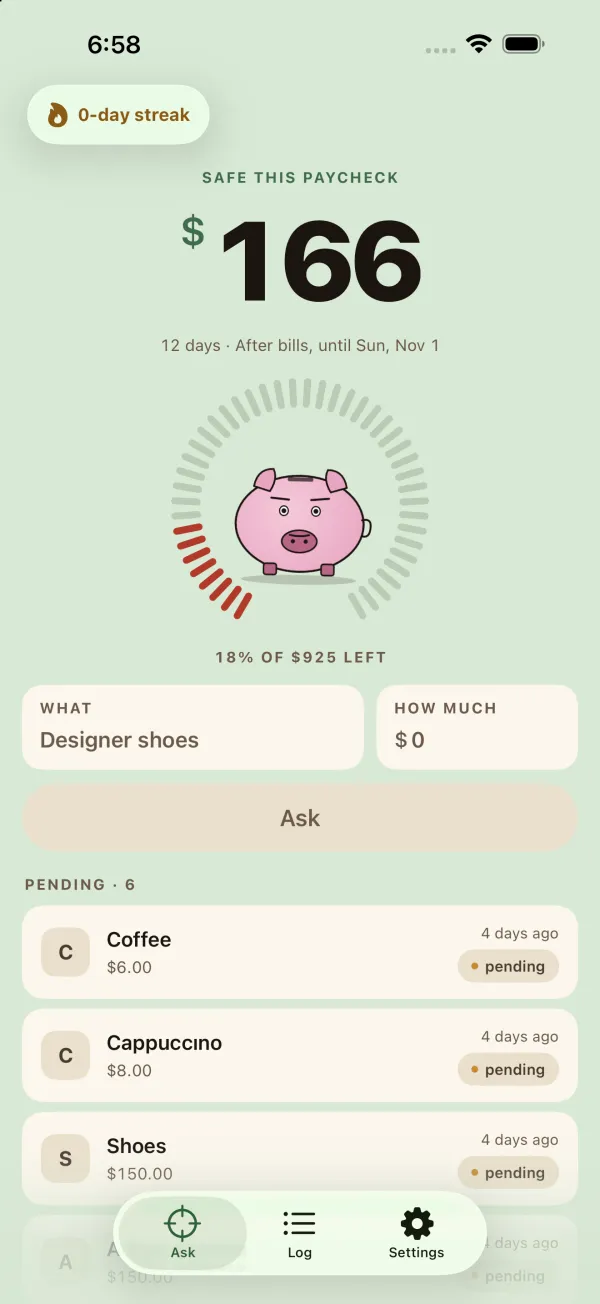
- See your weekThe home screen shows what's safe to spend this paycheck and how many days it has to last.
- Ask before you buyPork checks every temptation against this week's number.
Frequently asked questions
How do I pay rent with a weekly paycheck?
Set aside a quarter of your rent (or a bit more, to be safe) from every weekly paycheck, so the full amount is waiting when it's due. Keeping that money in a separate savings pot stops it looking like spending money.
What do I do with the fifth paycheck?
Some months have five paydays when you're paid weekly. If your monthly bills are already covered by the other four, the fifth is a great chance to boost savings, pay down debt, or get ahead on next month's bills.
Is weekly pay better for budgeting?
It can be. Weekly pay means you're never far from the next paycheck, so an overspend gets noticed and fixed quickly. The challenge is making sure the big monthly bills are covered, which is what setting aside a share each week solves.
Sources & further reading
- Length of pay periods in the Current Employment Statistics survey — U.S. Bureau of Labor Statistics
- Bill calendar (Your Money, Your Goals) — Consumer Financial Protection Bureau
Next Paycheck is a budgeting and spending-accountability tool, not a bank or a financial adviser. This page is general information for educational purposes, not financial, legal or tax advice: your situation is your own, so consider a qualified professional before major money decisions. If debt feels unmanageable, a nonprofit credit counselor can help, and if shopping feels out of control or is causing you distress, it is worth talking to a doctor or mental health professional.